
Industry
Beverages & Bottlers
Geodot calculates the route and the pallet build in the same step. Before a trip is closed, it knows what fits in each truck, how much space the returnables need and where the glass goes.
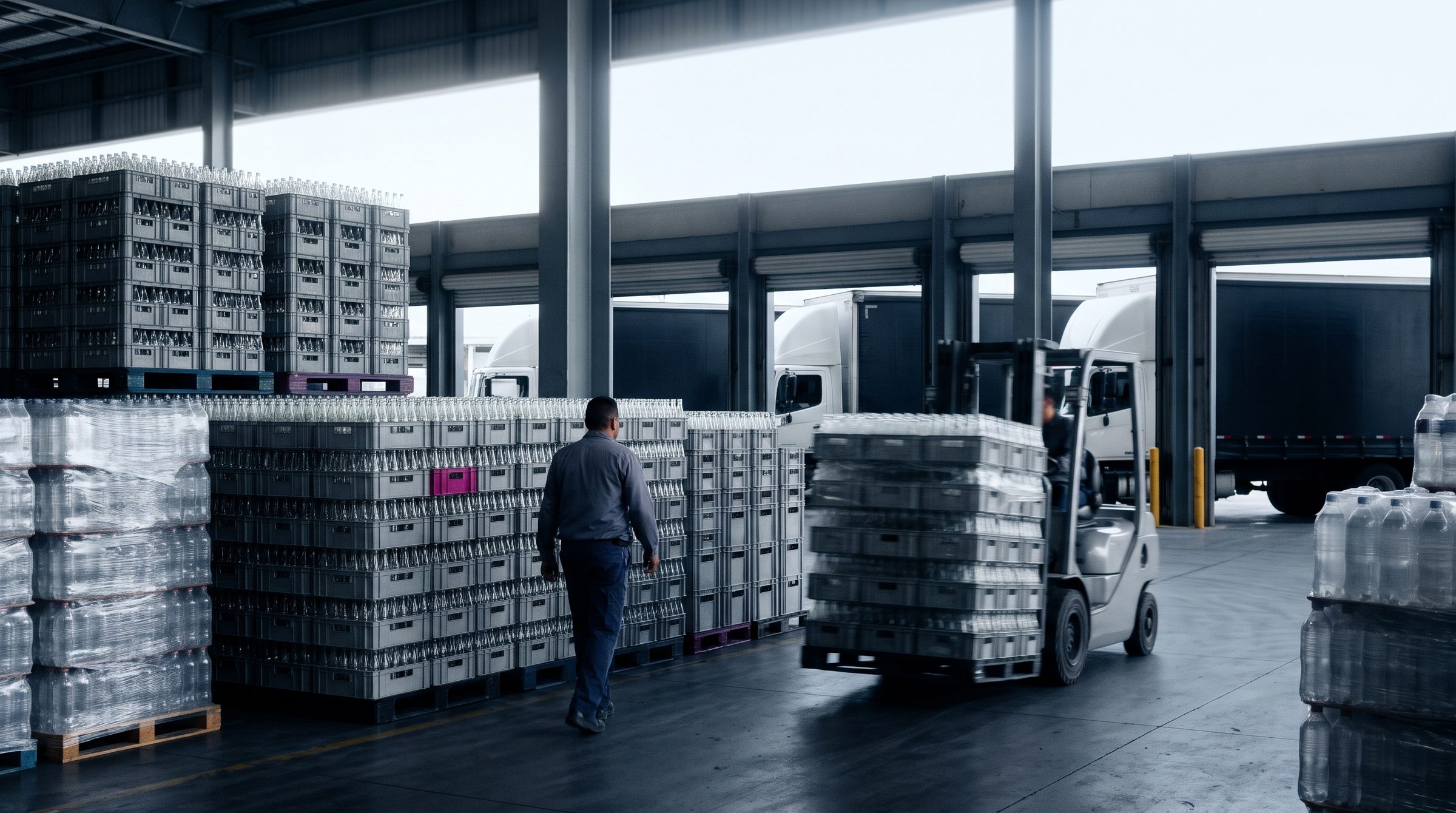
What shapes a bottler's truck load
- Every truck holds space for the returnable containers coming back, and that space is estimated by eye.
- Glass, PET, cans and Tetra Pak follow different stacking rules. Glass goes on the bottom.
- Since nobody knows whether the pallet build will fit, trucks leave with a load margin and empty space.
- BASIS has no standard connectors; the Release 53 integration is in production.
- Some SKUs move on specialized equipment rather than as full layers.
Routing and palletizingOne calculation
Returnable-glass customersReassigned across trucks
BASIS connectionRelease 53, in production
StackingBy container type
Modules for bottlers
Core modules
Complementary modules
A bottler in Argentina, in production
85% → 99%
average truck load, with transport cost down 8%. Routing and palletizing are calculated in the same step.
Bottler · Argentina
+10%
capacity from the returnable-glass rule, which moves glass customers between trucks without rebuilding the rest of the trip.
Bottler · Argentina
4 to 5
fewer trucks per day. The operation had 100 trucks under contract for a volume that called for 150, and 50 were running second trips.
Bottler · Argentina
One day of your orders, run through Geodot
Let's review one day of your orders and work out how much capacity your fleet has left.