
Airport bonded warehouses and air cargo
Every piece checked against the manifest, put away and released with an audit trail
From the flight manifest to gate-out, with no re-keying. Grupo Camili runs its bonded warehouse at Mexico's Felipe Ángeles International Airport (AIFA) on Geodot, with dangerous goods, refrigerated and general cargo zones.
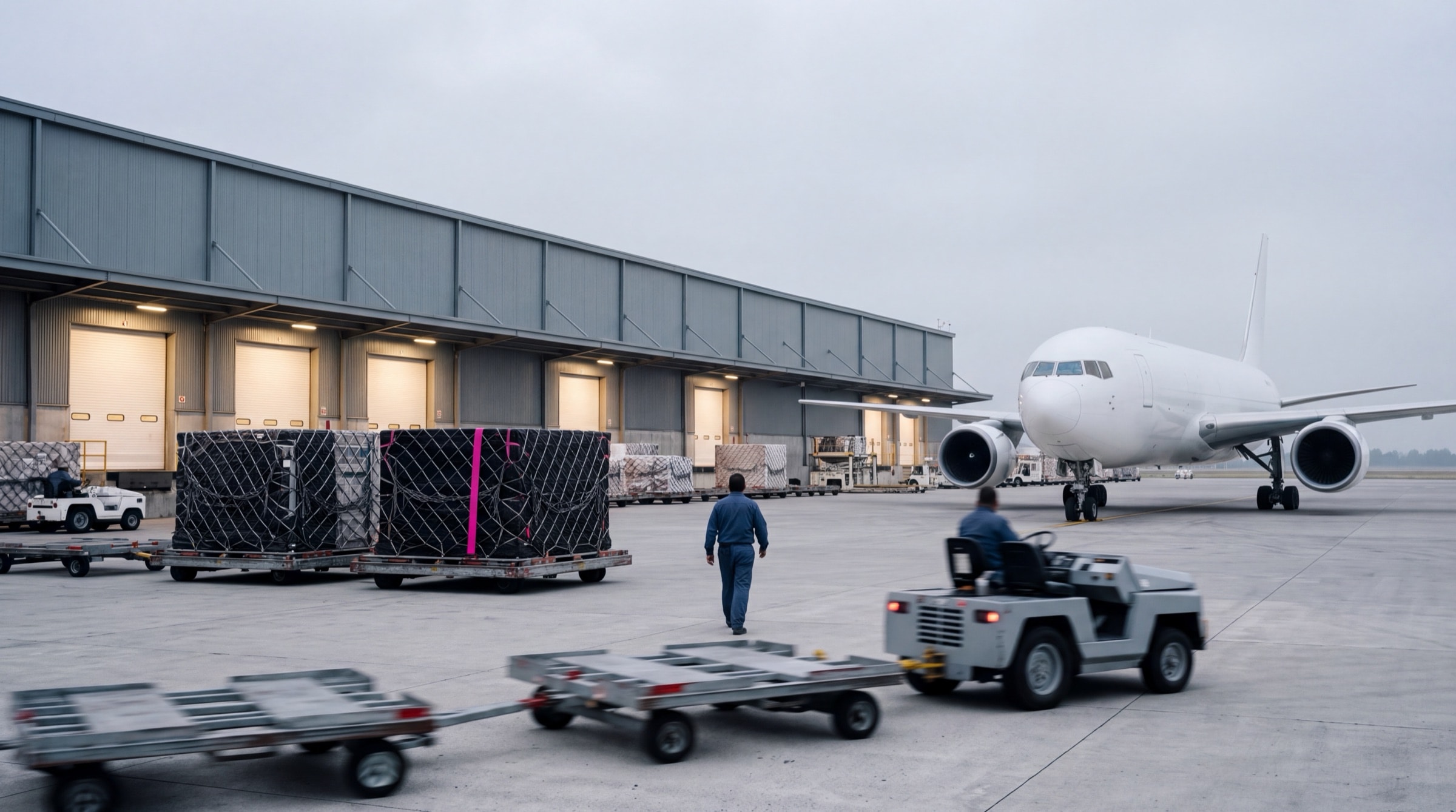
At Felipe Ángeles International Airport (AIFA), Mexico
7,000 m²
bonded warehouse running on iWMS and Zero Label, from receiving to release.
Grupo Camili · AIFA · in production
100%
of pieces scanned and logged in the release trial. Each scan recorded the air waybill, time, user and device.
Air cargo operator · AIFA · release trial
What Mexican customs (ANAM) checks in an inspection
The guidelines of Mexico's customs agency (ANAM) for bonded facilities require operators to prove their operation with records. This is what Geodot keeps on file.
Entry and exit log
- What is checked
- A systematic record of every entry and exit of cargo, vehicles and people.
- What Geodot records
- Every entry and exit of cargo, vehicles and people is logged in the system, with date and time.
Traceable inventory
- What is checked
- Inventory by location, with shortages, overages and damage documented.
- What Geodot records
- The manifest check flags shortages, overages and weight differences as each ULD is broken down. Every later move stays in the piece's history.
Zones under different rules
- What is checked
- Separate, delimited areas for dangerous goods, refrigerated and general cargo, plus control of the abandoned cargo area.
- What Geodot records
- Each zone has its own putaway rules. The abandoned cargo area is managed as one more zone, with an alert before cargo reaches its abandonment deadline.
Shipment file
- What is checked
- The documents for each operation, available whenever the authority asks for them.
- What Geodot records
- Air waybills, manifest, customs entry, permits and scans stay linked to the operation in the Document Hub, ready to hand over.
How it works inside the facility
Geodot reads the flight manifest and rebuilds every ULD with its air waybills and pieces before the cargo reaches the floor. Every step is checked against the manifest, piece by piece.
Manifest
The FFM flight manifest message, the pre-alert and the flight documents arrive by email or file transfer. Geodot builds the full tree with no manual entry.
Document HubManifest check
Every piece is scanned at ULD breakdown, against its ULD and air waybill. Shortages, overages and pieces under the wrong air waybill show up at the moment of scanning.
Receiving on the origin label
Each piece is identified by the label it carries from origin. Nobody relabels it at the dock.
Zero LabelZone-based putaway
Each piece is put away by zone: dangerous goods, refrigerated or general cargo, each under its own rules.
iWMSCustody
Inventory by location, customs broker pre-inspections (previo) and logged moves. Alerts before cargo reaches its abandonment deadline or a permit expires, with dates read from the documents themselves.
Release
The customs entry is checked against the air waybill and the scans: waybill number, pieces and weight. If anything is off, the piece stays. Every release records time, user and device.
Shipment file
The documents and scans of the operation are kept together in one shipment file, ready to hand over when customs or an AEO (OEA) review asks for it.
Document Hub
Documents linked to every move
- Master and house air waybill (MAWB / HAWB)
- Flight manifest (FFM)
- Pre-alert
- Commercial invoice
- Customs entry (pedimento)
- Permits and certificates
Geodot flags discrepancies before release. The facility authorizes release; customs clearance belongs to customs.
One flight, from manifest to release
This is a flight in Geodot: the manifest builds the tree, the manifest check flags what does not match during the ULD breakdown, and every release goes into the record.
Airport bonded warehouse · Flight GD 418
Manifest check in progress
01Flight / manifest
GD 418
MIA → NLU · 06:12
FFM
- 2 ULDs
- 3 master AWBs
- 5 house AWBs
- 36 pieces
02–07ULD, master and house AWBs, pieces, manifest check and location
02ULD
03Master AWB
04House AWB
05Pieces
06Manifest check
07Location by zone
ULD PMC 41207
Master …2048 1736
House H-3301
GeneralG-1412 pieces
House H-3302
GeneralG-158 pieces
Master …2048 1740
House H-3310
Dangerous goodsP-024 pieces
ULD AKE 30815
Master …2048 1755
House H-3321
RefrigeratedR-036 pieces
House H-3322
RefrigeratedR-046 pieces
35 of 36 pieces checked
1 missing · 1 piece from another waybillH-3302: 7 of 8 arrived. AKE 30815 carried a piece from H-3415.
- Scanned
- Missing
- Another waybill
08Release with its record
Release recorded
- Waybill
- H-3301
- Pieces
- 12 of 12
- Time
- 14:32
- User
- OP-14
- Device
- Scanner 07
Filed in the record with the documents and the scans.
The facility authorizes release; customs clearance belongs to customs.
What each party gets from a facility that runs on Geodot
Bonded facilities and ground handlers
Receiving on the origin label, zone-based putaway and piece-level evidence at release. Every move in custody is logged, ready for an inspection.
This is how Grupo Camili operates at AIFA today.
Freight forwarders and customs brokers
The facility gives you the status of every piece and its documents at each step: checked, in custody, released. Waybill, piece-count and weight differences are flagged before release.
Geodot delivers that status through files, database or API.
Cargo airlines
Every piece on the flight is scanned against its ULD and its air waybill at breakdown. Shortages, overages and pieces under the wrong air waybill are documented with waybill, time, user and device.
Measured in the release trial with an air cargo operator at AIFA.
Works alongside the airline's and the forwarder's systems
Geodot is the facility's system. The airline's cargo system and the forwarder's platform stay as they are.
Geodot receives the manifest and returns the status of every piece. It connects through files, database or API, depending on what each party uses.
Receives
- Flight manifest (FFM)
- Pre-alert
- Master and house air waybills
Returns
- Status of every piece
- Manifest check discrepancies
- Shipment file
Facility assessment against Mexico's ANAM guidelines
The first step is a written diagnosis of your facility.
We walk through one day of operation
We follow one day of cargo in your facility, from the flight's arrival to the piece leaving the warehouse.
We compare your records with what the authority requires
Point by point, we review what is recorded today and what the ANAM guidelines ask for.
You get the gaps in writing
A document with every gap we found and how to close it.
Then we define a one-week pilot in your facility, with success criteria signed by both parties.
Request a facility assessmentStart with one of your flights, or with the checklist
Two ways to see whether Geodot fits your facility before booking a meeting.
Test with your manifest
Send us a manifest and we'll send back the breakdown
Upload the FFM manifest or the pre-alert for one flight. Within one business day we send you the full breakdown, with ULDs, master and house air waybills and pieces, plus any inconsistencies we find.
PDF checklist
What is reviewed at a bonded warehouse in Mexico
The points reviewed in a customs inspection and the record that proves each one, in two pages to go through with your team.
Bonded facility FAQ
How long does it take to go live?
The first operation goes into production in about 90 days. Before you commit to the full project, the pilot tests the system with your cargo and your criteria.
What equipment does the facility's staff need?
The field app runs on standard Android devices, including Zebra handhelds.
Where is the data hosted?
In a cloud managed by Geodot or on the facility's own servers. This is decided before the project starts.
Can it handle dangerous goods, refrigerated and general cargo in the same warehouse?
Yes. Each zone has its own putaway rules within the same warehouse. Grupo Camili operates this way at AIFA.
Does it log people and vehicles in and out, and control the abandoned cargo area?
Yes. Entries and exits of people and vehicles are logged alongside those of cargo, and the abandoned cargo area is managed as a zone of the facility.
Does it replace the airline's or the forwarder's system?
No. Geodot runs the facility: it receives the manifest and returns the status of every piece through files, database or API.
See a bonded facility running from manifest check to gate-out
We're at the Air Cargo Forum in Miami. Book a meeting during or after the event and we'll show you the manifest check, piece-level traceability and the shipment file for one operation.