
Air cargo terminals
Every piece in your terminal, traceable from flight to gate.
Software for cargo terminals and bonded warehouses, built on IATA's data model: manifest, breakdown check, storage, landside release and evidence.
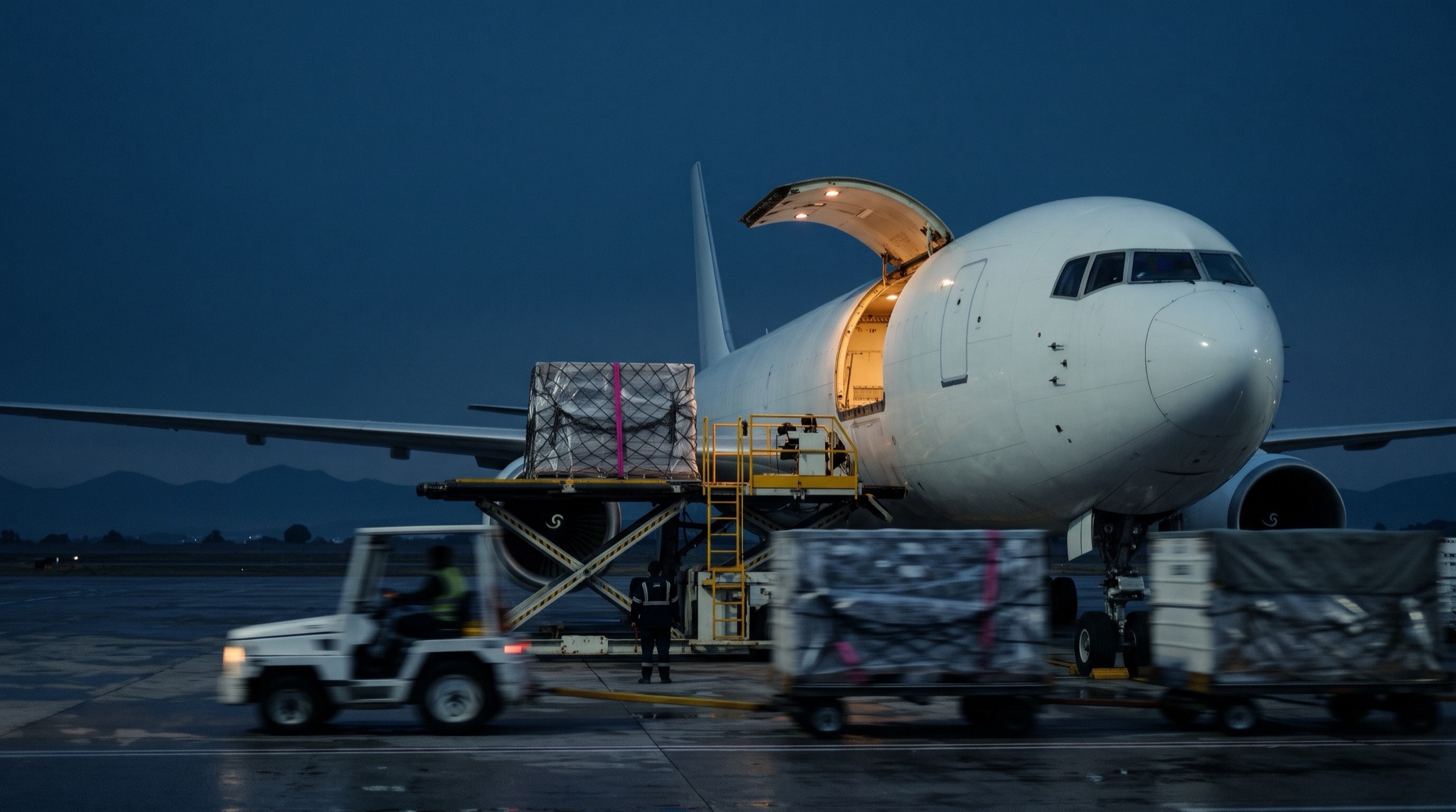
At Felipe Ángeles International Airport (AIFA), Mexico
7,000 m²
Bonded warehouse at Felipe Ángeles International Airport (AIFA), with dangerous goods, cold chain and general cargo zones. Integrated with its local SQL ERP, cold-chain telemetry, invoicing and TXT files.
Grupo Camili, in production with iWMS and Etiqueta Zero
100%
Of pieces scanned with evidence in the release trial of an air cargo operator at AIFA, Mexico.
Release trial, operator not named
What is at stake
+3.4%
Growth in global air cargo demand (CTK) in 2025, a record volume according to IATA
IATA
2.9%
Of global air cargo traffic is flown by Latin American carriers, the region where we operate
IATA, Latin America
HAWB
The level at which the EU's ICS2 has required pre-loading cargo data since 1 March 2023
ICS2, EU
1 Jan 2026
IATA's Cargo Services Conference endorsed ONE Record as the preferred data-sharing standard
IATA, Cargo Services Conference
Between the aircraft and the gate, cargo passes through four hands.
Airline, handler, warehouse and trucker each keep their own record. What gets lost sits in the handovers.
The manifest arrives by email
FFM, pre-alert and waybills come as attachments, in a different layout for every airline. Someone retypes them before the flight lands, or after.
The ULD is opened without a list
Until breakdown, nobody confirms which house waybills each container holds. A piece from another waybill is found on the warehouse floor.
The breakdown check stays on paper
Shortages and overages are written down by hand. When customs asks, the evidence is not tied to the waybill or to whoever scanned it.
Trucks wait at the gate
With no slot and no assigned door, landside release depends on arrival order. Waiting time goes unmeasured.
Geodot ties the four records to the same waybill: what the airline declared, what the terminal scanned and what left through the gate.
The manifest becomes expected inventory.
Geodot reads the flight manifest and the pre-alert from email or file, and builds the shipment before it reaches the floor.
FFM and pre-alert reading
IATA Cargo-IMP manifest, spreadsheets and PDFs from each airline. When two sources disagree, the higher-ranked one wins and the difference is flagged.
Flight, ULD, master, house, piece
The full shipment tree, with pieces, weight, special handling codes and tariff codes.
Expiry alerts
Document dates trigger the alerts. Unclaimed cargo is controlled before the deadline.

Every piece is scanned against what was expected.
The check builds the list by waybill and ULD. Every scan is recorded with user, device and time.
Flight breakdown check
The agent scans master, house and ULD. Shortages and overages appear when the check closes, tied to each waybill.
See iWMSDirected putaway
The system proposes where each pallet goes by zone: dangerous goods, cold chain or general cargo.
See iWMSEtiqueta Zero
Data travels with the pallet from receipt onward. Manual relabelling at the dock is eliminated.
See Etiqueta ZeroRelease with evidence
Piece-level exit scan, entry and exit log for people and vehicles, and control of the unclaimed-cargo area.
What happens on the floor, in IATA's language.
Each step Geodot records maps to an IATA status code. These are the events a terminal shares with airlines and forwarders.
| Step in the terminal | What Geodot records | IATA status |
|---|---|---|
| Flight received and broken down | Scan of each ULD, master and house waybill, with user, device and time. | RCF |
| Discrepancy on the check | Shortage, overage or piece from another waybill, tied to the affected waybill. | DIS |
| Release to the consignee or agent | Exit scan per piece, truck and driver, against the expected list. | DLV |
| Publication to ONE Record servers | The same events sent to authorised airlines and forwarders as ONE Record logistics events. | In development |
Status codes from IATA Cargo-IMP (FSU message): RCF received from flight, DIS discrepancy, DLV delivered. Geodot does not file customs declarations; it supplies piece-level data to whoever files them.
The common standard of air cargo.
ONE Record replaces messages between airlines, handlers, terminals and forwarders with data shared through APIs. It is the same at every airport in the world.
The same data model
Flight, ULD, master, house and piece are already the structure of the system, the one IATA's ontology uses.
In Geodot today
Terminal events
Receipt, breakdown check, discrepancies and release published to the ONE Record servers of authorised airlines and forwarders.
In development
One rollout, many airports
What is connected at one airport is repeated at the next, with the same airlines and the same standard.
For a network
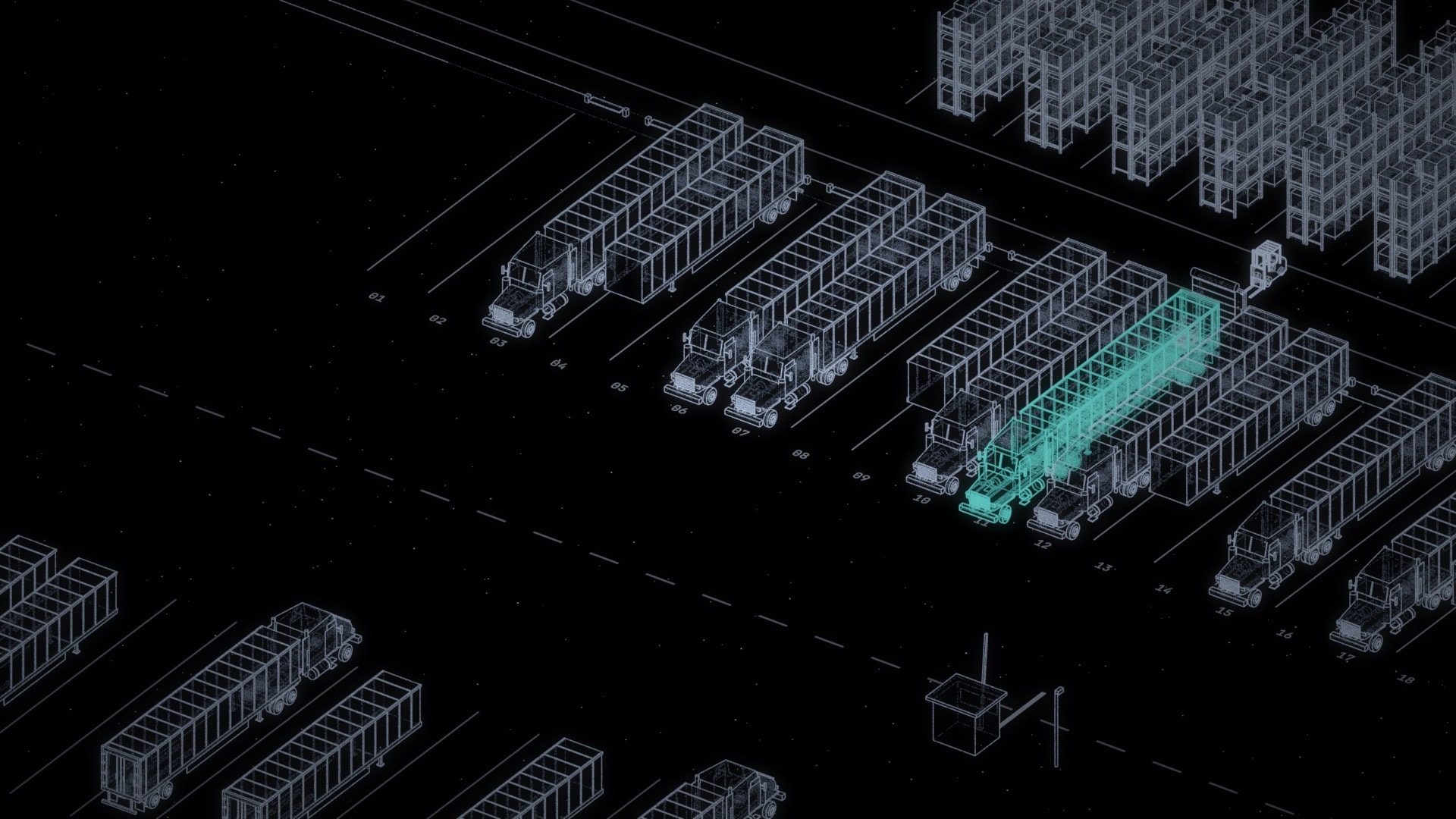
Landside release, with a slot and an assigned door.
Released cargo leaves by truck. Geodot organises the gate and the doors with the same data the warehouse uses.
Time-window appointments
The door is reserved before the truck arrives, linked to the waybill it will collect.
Slot booking
Terminal alerts
Truck without a slot, waiting time exceeded, incomplete documents. Waiting and door metrics by trucker.
Control Tower
The driver on a phone
Slot check-in, documents and delivery signature, without going to the counter.
Companion App

One airport first, the rest on the same model.
We start at the terminal with the most volume and replicate the configuration across the network.
One-week pilot
With acceptance criteria signed before it starts. If they are not met, we do not move forward.
First operation in about 90 days
A 13-week plan in four phases, with your operations and customs teams from the first one.
Connected to what you already run
SAP Business One, SAP S/4HANA, Oracle, your own SQL databases, cold-chain telemetry and invoicing. Zebra scanners and standard Android devices.
Cloud or your own servers
Cloud managed by Geodot, or installed on your servers, according to your data policy.
Logistics technology built by logistics specialists, operating in Mexico and Argentina.
Request a demo with one of your flightsLet's start with one of your flights.
Three steps to decide with data from your own operation.
A 45-minute call
With your operations team. We review your terminals and choose where to start.
A demo with one of your flights
Send us the manifest and pre-alert of a recent flight. We return the expected inventory tree, with the discrepancies flagged.
One-week pilot
On a terminal of your choice, with acceptance criteria signed beforehand.

Start with one of your flights, or with the brochure
Two ways to see whether Geodot fits your terminal before booking a meeting.
Request a demo with one of your flights
Send us the manifest of one flight and we'll send back the tree
Upload the manifest (FFM) or the pre-alert of a recent flight. Within one business day we return the expected inventory tree, with ULDs, master and house waybills and pieces, and the discrepancies we find.
PDF brochure
Air cargo terminals on Geodot
The 12-page overview: IATA data model, breakdown check, terminal events, landside and rollout for a network.
Questions from terminal operators
Does Geodot file customs declarations?
No. Geodot supplies piece-level data to whoever files them. Every scan is recorded with user, device and time and stays tied to the waybill.
Is Geodot connected to ONE Record?
The system's data model is the one IATA's ontology uses: flight, ULD, master, house and piece. Publishing terminal events to the ONE Record servers of authorised airlines and forwarders is in development.
What do we send for the demo with one of our flights?
The manifest (FFM) or the pre-alert of a recent flight. It can be anonymised. Within one business day we return the expected inventory tree, with the discrepancies flagged.
What systems does it connect to?
SAP Business One, SAP S/4HANA, Oracle, your own SQL databases, cold-chain telemetry and invoicing. It runs on Zebra scanners and standard Android devices.
Where does it run?
In the cloud managed by Geodot, or installed on your own servers, according to your data policy.
How does a rollout across several airports start?
With a one-week pilot at the terminal with the most volume, with acceptance criteria signed before it starts. The first operation in production follows in about 90 days, and the configuration is then replicated across the network.
For bonded facilities in Mexico, with ANAM guidelines and a facility assessment, see the Mexico page. Airport bonded warehouses in Mexico
See one of your flights as an expected inventory tree
Send us the manifest and pre-alert of a recent flight. We return the tree with the discrepancies flagged, and we agree on a one-week pilot if it fits.